Converting 100 ml to ounces gives 3.3814 US fluid ounces, normally rounded to 3.38 US fl oz. Product labels on perfume, cosmetics, and other liquids commonly round this value to 3.4 fl oz. In the British Imperial system, 100 mL equals 3.5195 Imperial fluid ounces, or approximately 3.52 imp fl oz.
The two results differ because a US fluid ounce and an Imperial fluid ounce do not have the same volume. You must identify which measurement system a recipe, bottle, or measuring tool uses before selecting the answer.
It is also important to distinguish fluid ounces from weight ounces. Milliliters and fluid ounces both measure volume, so the conversion does not depend on the liquid. Converting 100 mL into ounces by weight requires the substance’s density.
Quick Answer
| Conversion | Calculated result | Rounded result |
|---|---|---|
| 100 mL to US fluid ounces | 3.38140227 US fl oz | 3.38 US fl oz |
| 100 mL to Imperial fluid ounces | 3.51950797 imp fl oz | 3.52 imp fl oz |
| Common product-label value | 3.3814 US fl oz | 3.4 fl oz |
| 100 mL to weight ounces | Depends on density | No universal answer |
For most American recipes and product labels, use:
100 mL ≈ 3.38 US fl oz
Which Type of Ounce Do You Need?
The word “ounce” can describe more than one measurement. Choosing the correct type prevents two valid conversion results from appearing contradictory.
US fluid ounce
The US fluid ounce is a volume unit used in the United States customary measurement system:
1 US fl oz = 29.5735295625 mL It commonly appears on:
-
American perfume and cosmetic labels
-
US recipes
-
Beverage containers
-
Measuring cups sold for the US market
-
Liquid product packaging
When a converter states that 100 mL equals 3.38 fluid ounces without naming another system, it usually means US fluid ounces.
Imperial fluid ounce
The Imperial fluid ounce belongs to the British Imperial measurement system:
1 imp fl oz = 28.4130625 mL An Imperial fluid ounce contains fewer milliliters than a US fluid ounce. Therefore, the same 100 mL volume produces a larger number of Imperial fluid ounces:
100 mL ≈ 3.52 imp fl oz Imperial fluid ounces may appear in older British recipes, measuring tools, and conversion references. The metric system remains the normal measurement system in the United Kingdom and most other countries.
Ounce by weight
An ordinary ounce, written as oz without “fl,” usually measures mass:
1 oz = 28.349523125 g It cannot be converted directly from milliliters because milliliters measure volume. Density is required when converting a liquid volume into weight ounces.
How to Convert 100 ml to Ounces in the US System
To convert milliliters to US fluid ounces, divide the volume by 29.5735295625:
US fl oz = mL ÷ 29.5735295625 Insert 100 mL:
US fl oz = 100 ÷ 29.5735295625 US fl oz = 3.38140227 Therefore:
100 mL = 3.38140227 US fl oz The appropriate rounded value depends on how the result will be used:
-
3.3814 fl oz for a detailed conversion
-
3.38 fl oz for most calculations and recipes
-
3.4 fl oz for a short product-label value
You can also multiply the milliliters by the reciprocal conversion factor:
US fl oz = mL × 0.0338140227 For 100 mL:
100 × 0.0338140227 = 3.38140227 US fl oz Dividing by 29.5735295625 and multiplying by 0.0338140227 are equivalent methods.
Converting 100 mL to Imperial Fluid Ounces
Use a different divisor for Imperial fluid ounces:
imp fl oz = mL ÷ 28.4130625 For 100 mL:
imp fl oz = 100 ÷ 28.4130625 imp fl oz = 3.51950797 Rounded to two decimal places:
100 mL ≈ 3.52 imp fl oz This result should not be replaced with 3.38 fl oz. The values refer to two different units:
100 mL = 3.3814 US fl oz 100 mL = 3.5195 imp fl oz When precision matters, label the result as US fl oz or imp fl oz rather than writing only “oz.”
Why Does a 100 mL Bottle Say 3.4 fl oz?
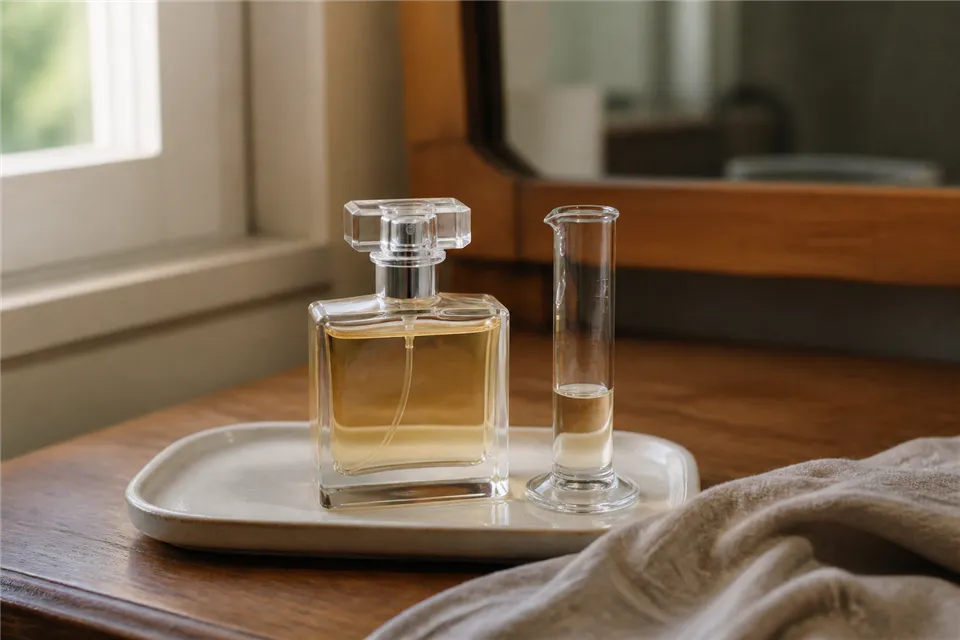
Perfume and cosmetic bottles often display their volume in both milliliters and US fluid ounces. This allows manufacturers to use packaging that can be understood in metric and American markets.
The calculated conversion is:
100 mL = 3.38140227 US fl oz Displaying eight decimal places would be unnecessary on a product label, so the value is commonly rounded to one decimal place:
3.3814 → 3.4 fl oz A bottle may therefore show:
-
100 mL
-
3.4 fl oz
These markings describe approximately the same volume.
To check the rounded label in reverse:
mL = US fl oz × 29.5735295625 3.4 × 29.5735295625 = 100.55 mL The difference of about 0.55 mL comes from rounding 3.3814 to 3.4. It does not necessarily mean the bottle has two different stated capacities.
Product labels written in English usually display a decimal point, as in “3.4 fl oz.” The exact formatting may depend on the market and labeling requirements.
Does the Liquid Change the Conversion?
No, not when converting one volume unit into another.
One hundred milliliters of water, milk, cooking oil, perfume, or liquid soap all occupy the same volume of 100 mL. Each volume therefore equals:
3.3814 US fl oz or:
3.5195 imp fl oz Density does not enter this calculation because mL and fl oz both measure volume.
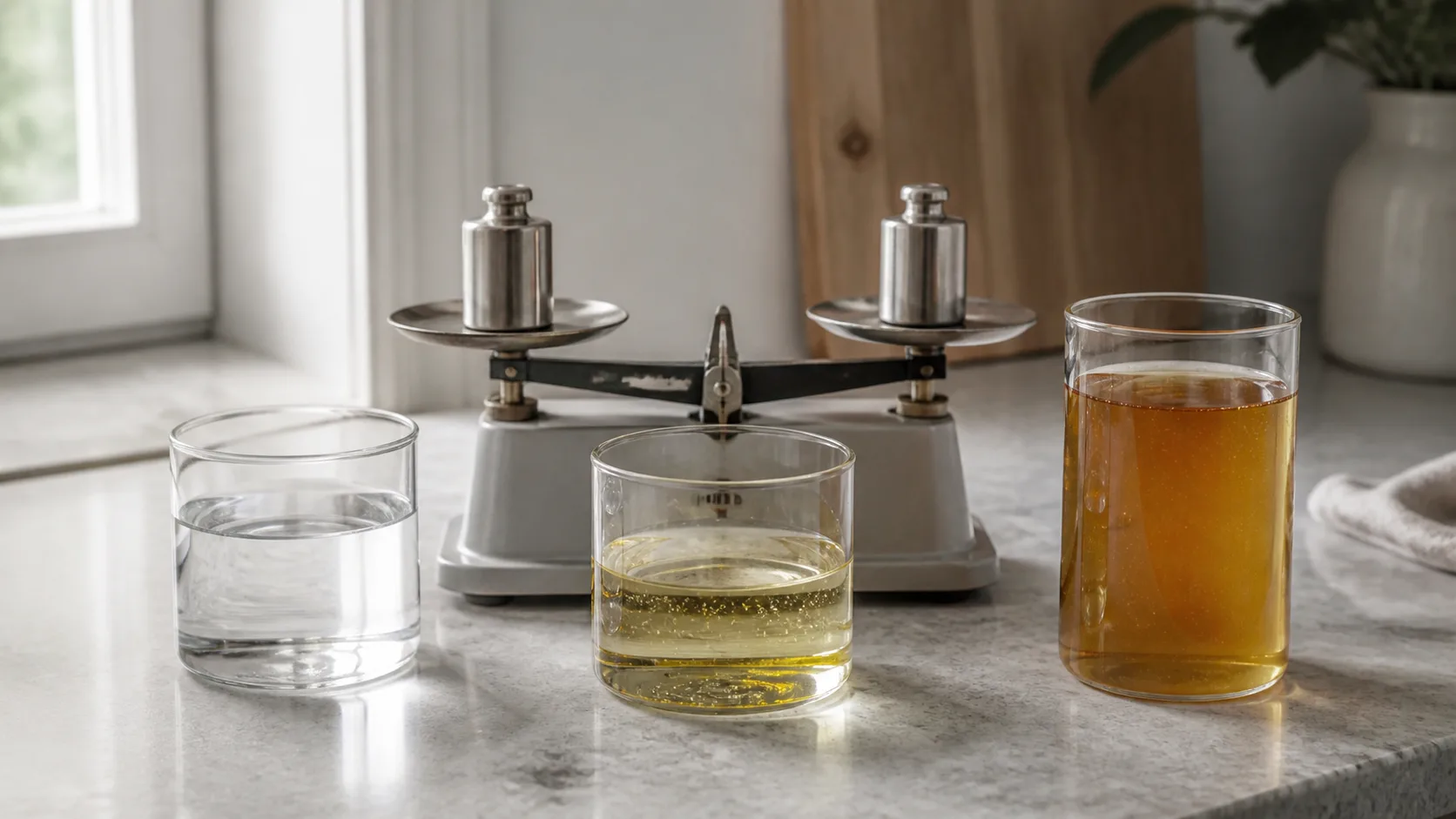
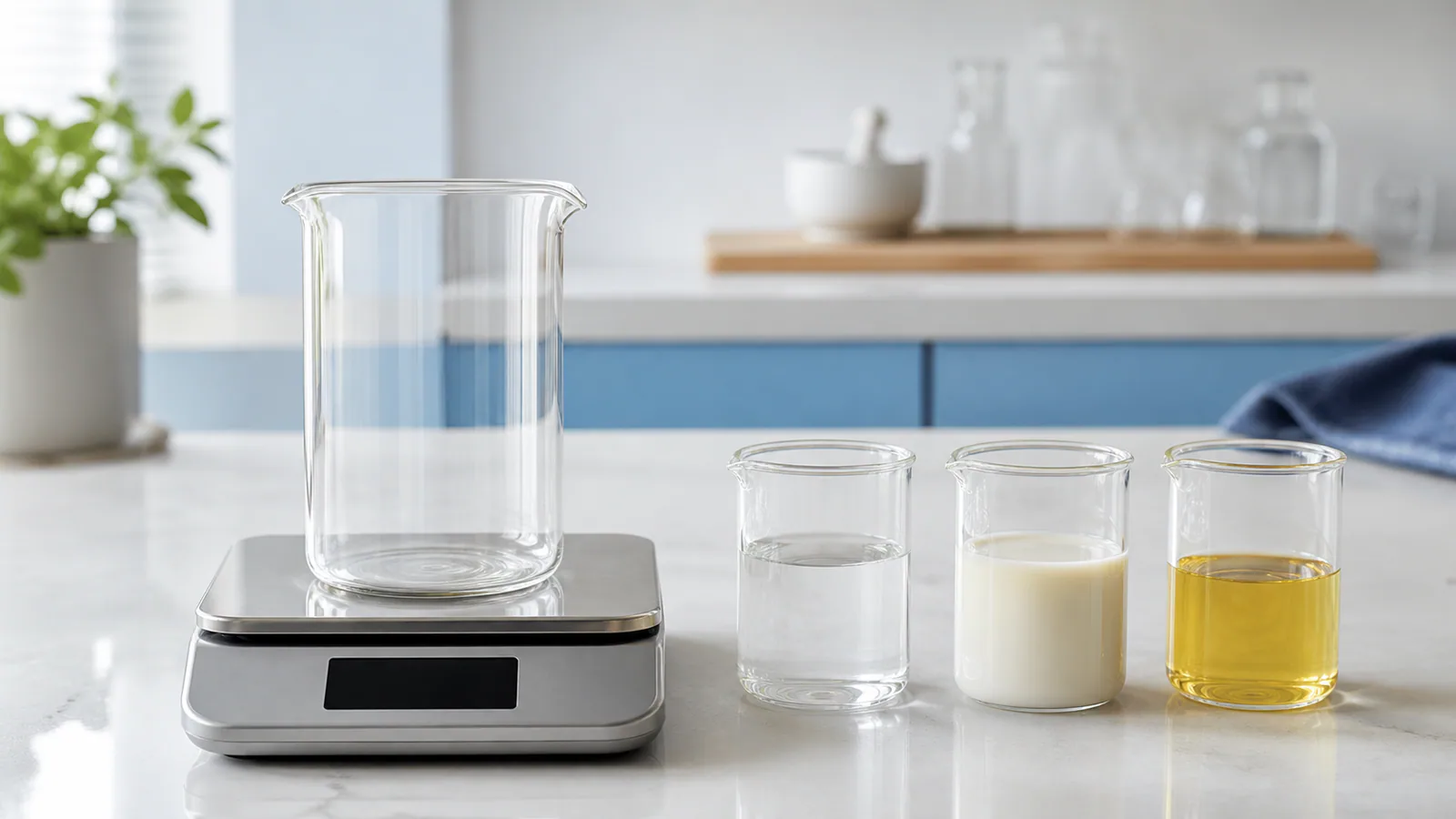
The liquids can still have different masses. For example, 100 mL of oil may weigh less than 100 mL of water, even though both occupy the same amount of container space. Density becomes necessary only when converting volume into grams, kilograms, or weight ounces.
This distinction is especially helpful in recipes. If a recipe requests 100 mL of milk and the measuring cup shows US fluid ounces, you can measure 3.38 fl oz directly. You do not need the density of milk because the recipe remains a volume measurement.
Practical Recipe and Measuring Examples
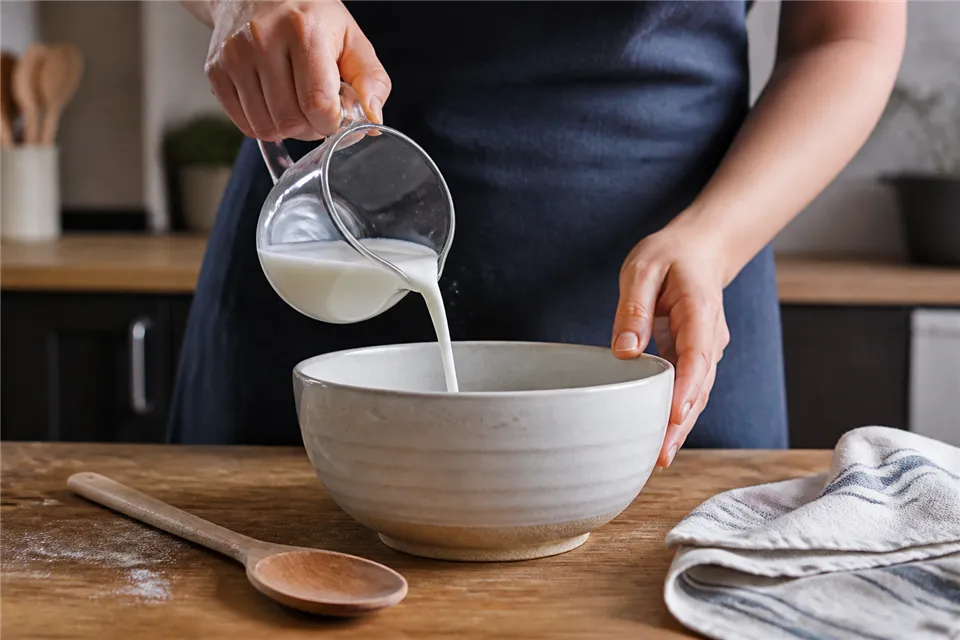
Converting a metric recipe
A recipe calls for 100 mL of milk, but your measuring cup is marked in US fluid ounces.
Use:
100 ÷ 29.5735295625 = 3.3814 Measure approximately:
3.38 US fl oz If the measuring cup has limited markings, 3.4 fl oz is a reasonable household approximation.
Using an Imperial measuring tool
An older British measuring jug is marked in Imperial fluid ounces:
100 ÷ 28.4130625 = 3.5195 The appropriate value is:
3.52 imp fl oz Using 3.38 on the same Imperial tool would provide slightly less than 100 mL.
Checking a 3.4 fl oz label
A container lists 3.4 US fl oz:
3.4 × 29.5735295625 = 100.55 mL This is close to 100 mL and shows how a rounded ounce label relates to the metric volume.
Measuring without fine decimal markings
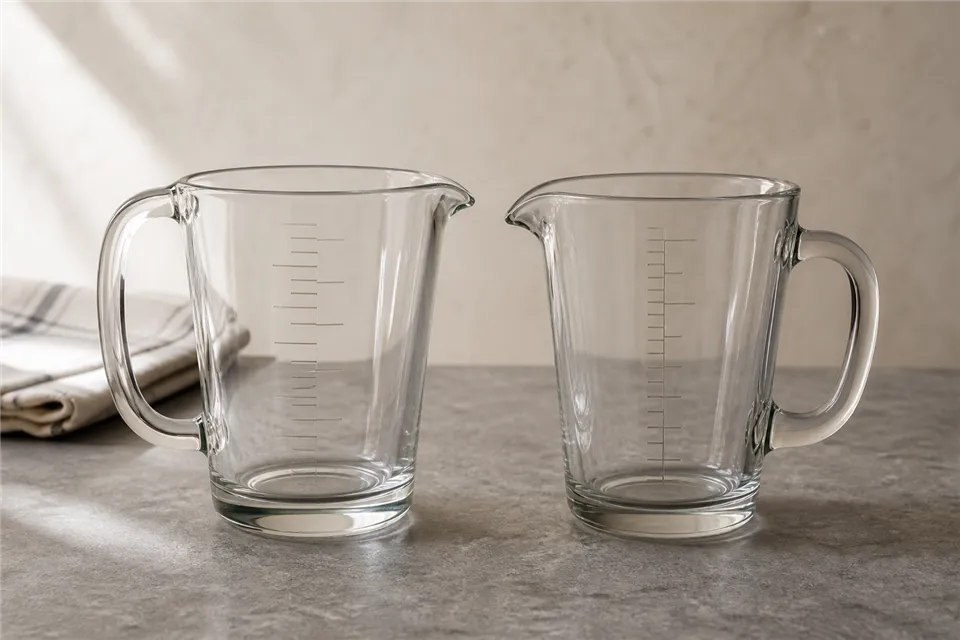
Many kitchen measuring cups do not show hundredths of a fluid ounce. If the recipe does not require laboratory precision, measure slightly more than 3 3/8 US fl oz or use the 100 mL line on a metric jug.
For baking formulas where small differences matter, measuring directly in milliliters is preferable to estimating between ounce markings.
Milliliters-to-Fluid-Ounces Table
| Milliliters | US fluid ounces | Imperial fluid ounces |
|---|---|---|
| 30 mL | 1.014 US fl oz | 1.056 imp fl oz |
| 50 mL | 1.691 US fl oz | 1.760 imp fl oz |
| 75 mL | 2.536 US fl oz | 2.640 imp fl oz |
| 100 mL | 3.381 US fl oz | 3.520 imp fl oz |
| 125 mL | 4.227 US fl oz | 4.399 imp fl oz |
| 150 mL | 5.072 US fl oz | 5.279 imp fl oz |
| 200 mL | 6.763 US fl oz | 7.039 imp fl oz |
| 250 mL | 8.454 US fl oz | 8.799 imp fl oz |
The values are rounded to three decimal places. Keep the full conversion factor during calculation and round only the final answer when greater accuracy is required.
Converting 100 mL to a Fraction of an Ounce
A fraction can be easier to use than a decimal on some kitchen tools.
A common approximation is:
100 mL ≈ 3 3/8 US fl oz However:
3 3/8 = 3.375 The calculated value is approximately 3.3814, so 3 3/8 fl oz is close but not exact.
Converting the fraction back to milliliters gives:
3.375 × 29.5735295625 ≈ 99.81 mL The difference is approximately 0.19 mL. That is unlikely to matter for an ordinary drink or recipe, but it may be unacceptable for laboratory work or a controlled manufacturing process.
Use the decimal result when precision is more important than convenience.
Fluid Ounces and Weight Ounces Are Not Interchangeable
Confusing fluid ounces with weight ounces is one of the most common conversion errors.
Fluid ounces measure volume
The abbreviation fl oz identifies a fluid ounce. It measures how much space a liquid occupies:
100 mL = 3.3814 US fl oz This conversion does not require density.
Ounces measure mass
The abbreviation oz without “fl” generally refers to an ounce of mass. To convert 100 mL into weight ounces, use the substance’s density:
oz = mL × density(g/mL) ÷ 28.349523125 Water, oil, milk, and honey can occupy the same 100 mL volume while weighing different amounts. There is therefore no single answer for “100 mL to ounces by weight.”
This is also why kilograms and milliliters cannot be exchanged without density. The guide explaining how many milliliters are in a kilogram covers that mass-to-volume relationship separately.
How Many Decimal Places Should You Use?
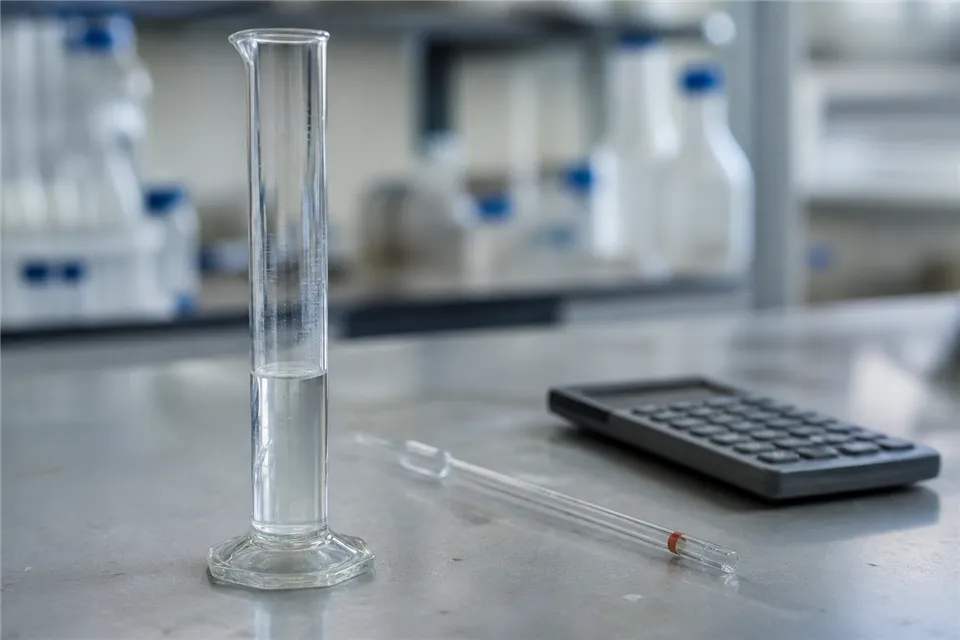
The best rounding level depends on the context.
Everyday conversion
Use:
100 mL ≈ 3.38 US fl oz Two decimal places provide a clear and practical result.
Product label
A label may use:
100 mL ≈ 3.4 fl oz This is easier to display and understand, but it is less precise.
Technical calculation
Retain more digits:
100 mL = 3.38140227 US fl oz More decimal places are only useful when the original volume and measuring instrument support that level of precision.
Imperial calculation
Use:
100 mL ≈ 3.52 imp fl oz Always identify the Imperial unit so it is not mistaken for the US result.
Converting Fluid Ounces Back to Milliliters
For US fluid ounces:
mL = US fl oz × 29.5735295625 For example:
3.38 × 29.5735295625 ≈ 99.96 mL The result is slightly below 100 mL because 3.38 is a rounded number.
For Imperial fluid ounces:
mL = imp fl oz × 28.4130625 Using 3.52 imp fl oz:
3.52 × 28.4130625 ≈ 100.01 mL Again, the minor difference is caused by rounding. Using the full unrounded fluid-ounce value returns 100 mL.
Common 100 mL Conversion Mistakes
Failing to identify the system
Writing “3.38 ounces” is ambiguous. Write 3.38 US fl oz or 3.52 imp fl oz so readers know which unit is intended.
Using the wrong conversion factor
Divide by 29.5735295625 for US fluid ounces and 28.4130625 for Imperial fluid ounces. Swapping the factors changes the result.
Confusing fluid ounces with weight ounces
Milliliters convert directly to fluid ounces because both measure volume. Weight ounces require density.
Treating 3.4 fl oz as exact
The exact calculated result is approximately 3.3814 US fl oz. The value 3.4 is a one-decimal-place approximation.
Calling 3 3/8 fl oz exact
Three and three-eighths equals 3.375 fl oz, not 3.3814. It is a useful kitchen approximation but not an exact conversion.
Changing the result for different liquids
The liquid does not change a volume-to-volume conversion. One hundred milliliters always represents the same number of fluid ounces within the selected measurement system.
Rounding before completing the calculation
Using an overly shortened conversion factor can create unnecessary error. Calculate with the full factor and round the final result.
Frequently Asked Questions
How many ounces is 100 mL?
One hundred milliliters equals approximately 3.3814 US fluid ounces, normally rounded to 3.38 US fl oz. In the Imperial system, 100 mL equals approximately 3.5195 imp fl oz, rounded to 3.52. The US result is the usual default for American recipes and product labels.
Is 100 mL equal to 3.4 oz?
Yes, 3.4 fl oz is a common rounded US volume for 100 mL. The more precise conversion is 3.3814 US fl oz. Converting the rounded 3.4 fl oz back gives approximately 100.55 mL, so the two label values are close but not mathematically identical.
How many Imperial ounces is 100 mL?
One hundred milliliters equals approximately 3.5195 Imperial fluid ounces. Rounded to two decimal places, the result is 3.52 imp fl oz. This differs from the 3.38 US fl oz result because the Imperial fluid ounce is smaller than the US fluid ounce.
Why does a 100 mL perfume say 3.4 fl oz?
Perfume labels commonly use US fluid ounces alongside milliliters. The precise conversion is 3.3814 US fl oz, which is rounded to 3.4 fl oz for a shorter label. Both markings represent approximately the same bottle capacity.
Is a fluid ounce the same as an ounce by weight?
No. A fluid ounce measures volume, while an ordinary ounce measures mass. Converting mL to fl oz requires only a fixed volume factor. Converting mL to ounces by weight requires the liquid’s density because equal volumes of different substances can have different masses.
How do I convert milliliters to fluid ounces?
Divide milliliters by 29.5735295625 for US fluid ounces. Divide by 28.4130625 for Imperial fluid ounces. For example, 100 ÷ 29.5735295625 = 3.3814 US fl oz. Keep the full factor during the calculation and round the answer at the end.
How many milliliters are in one fluid ounce?
One US fluid ounce contains exactly 29.5735295625 mL. One Imperial fluid ounce contains 28.4130625 mL. Because the units differ, “one fluid ounce in milliliters” has two possible answers until the measurement system is identified.
Does the conversion change for water, milk, or oil?
No. One hundred milliliters of any liquid equals 3.3814 US fl oz or 3.5195 imp fl oz. Density matters only when converting that volume into a mass unit such as grams, kilograms, or weight ounces.
Final Conversion
For 100 ml to ounces, use:
100 mL = 3.3814 US fl oz ≈ 3.38 US fl oz A product label may round this to 3.4 fl oz. If the context uses British Imperial units, the correct result is approximately 3.52 imp fl oz.
Always identify the ounce type before calculating. Milliliters convert directly to fluid ounces, while a conversion to ounces by weight requires the material’s density.