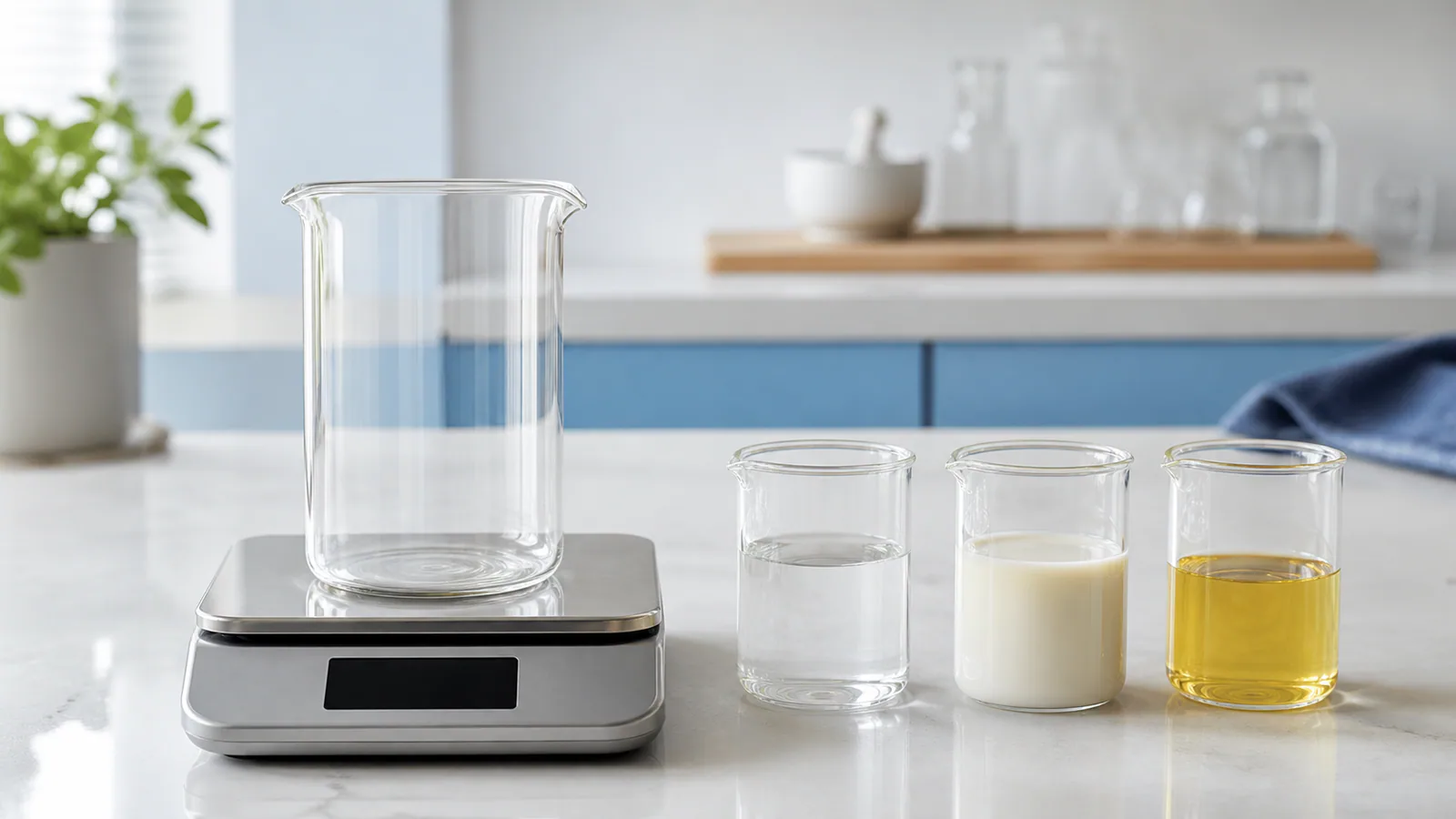
To understand how to calculate urine output ml kg hr, you need three values: the total urine collected in milliliters, the patient’s weight in kilograms, and the collection period in hours. Divide the urine volume by the patient’s weight multiplied by the number of hours:
Urine output (mL/kg/hr) = Total urine volume (mL) ÷ [body weight (kg) × time (hr)]
For example, if a 65 kg patient produces 390 mL over six hours, the calculation is 390 ÷ (65 × 6), giving 1 mL/kg/hr.
This weight-based urine output rate helps clinicians compare patients of different sizes and monitor changes over time. However, the result does not diagnose dehydration, acute kidney injury, or urinary obstruction by itself. Age, clinical condition, medications, fluid intake, blood pressure, laboratory results, collection accuracy, and the duration of reduced output all affect its interpretation.
Quick Formula
Use the following urine output formula:
Urine output (mL/kg/hr) = Urine collected (mL) ÷ [weight (kg) × collection time (hr)]
Follow these steps:
- Record the total urine volume in milliliters.
- Confirm the patient’s weight in kilograms.
- Convert the collection period to hours.
- Multiply weight by time.
- Divide the urine volume by that result.
- Report the answer in mL/kg/hr.
The abbreviations mL/kg/hr and mL/kg/h represent the same rate.
What Does mL/kg/hr Mean?
The unit mL/kg/hr means milliliters of urine per kilogram of body weight per hour. In British spelling, millilitres may be used instead.
Each part of the unit serves a purpose:
- mL measures the urine volume.
- kg adjusts the result for body weight.
- hr adjusts it for the observation period.
Suppose two patients each produce 40 mL in one hour. That amount may have a different clinical meaning for a 20 kg child than for an 80 kg adult. Dividing by body weight makes the comparison more useful.
Time matters for the same reason. A total of 300 mL collected over four hours is different from 300 mL collected over twelve hours. Using mL/kg/hr standardizes both weight and time.
A urine output calculation is not the same as estimated glomerular filtration rate, creatinine clearance, or urine concentration. Those measurements involve different inputs and answer different clinical questions.
How to Calculate Urine Output in mL/kg/hr
Step 1: Record the total urine volume
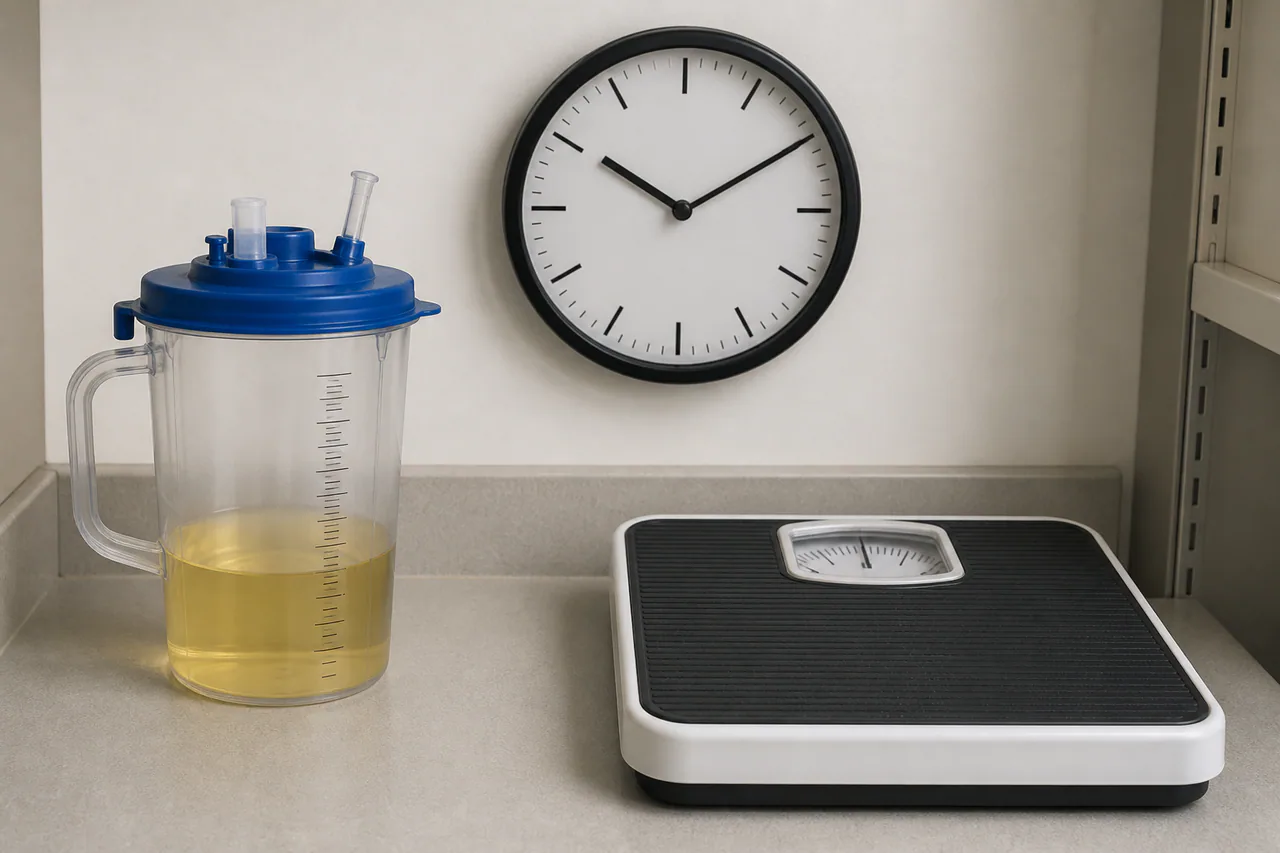
Measure all urine produced during a clearly defined period. Record the volume in milliliters.
If the amount is given in liters, multiply it by 1,000:
Volume in mL = Volume in L × 1,000
For example:
0.72 L × 1,000 = 720 mL
Make sure the recorded total covers the same period used in the calculation. A missed void, spill, leaking catheter, or incomplete collection can make the result inaccurate.
Step 2: Confirm the weight in kilograms
Use the patient’s current measured weight when available. If weight is provided in pounds, divide it by 2.2046:
Weight in kg = Weight in lb ÷ 2.2046
A patient weighing 154 lb weighs approximately:
154 ÷ 2.2046 = 69.9 kg
This can reasonably be rounded to 70 kg if the original weight is not more precise.
The appropriate weight to use in patients with obesity, pregnancy, amputation, major swelling, or rapid fluid-related weight changes may depend on the clinical protocol. Clinicians should follow local guidance rather than selecting an adjusted weight without justification.
Step 3: Convert time to hours
If the collection period is already stated in hours, no conversion is needed. To convert minutes into hours, divide by 60:
Time in hours = Minutes ÷ 60
For example:
90 minutes ÷ 60 = 1.5 hours
Avoid treating 30 minutes as 0.30 hours. Thirty minutes equals 0.5 hours.
Step 4: Apply the formula
Insert the three values:
UO = V ÷ (W × T)
Where:
- UO = urine output rate in mL/kg/hr
- V = urine volume in mL
- W = weight in kg
- T = time in hours
Keep the units visible during the calculation. This makes it easier to notice an unconverted value.
Worked Urine Output Calculation Examples

Adult example over six hours
A 64 kg adult produces 288 mL over six hours.
Urine output = 288 ÷ (64 × 6)
Urine output = 288 ÷ 384
Urine output = 0.75 mL/kg/hr
The calculated rate is 0.75 mL/kg/hr.
This result is arithmetic, not a diagnosis. Interpretation depends on the output trend and the patient’s wider clinical condition.
Pediatric example over eight hours
A 24 kg child produces 216 mL during an eight-hour observation period.
Urine output = 216 ÷ (24 × 8)
Urine output = 216 ÷ 192
Urine output = 1.125 mL/kg/hr
Rounded to two decimal places, the rate is 1.13 mL/kg/hr.
Age-specific expectations and the reason for monitoring should be considered before deciding whether this output is adequate.
Infant example over four hours
An infant weighs 7.5 kg and produces 54 mL over four hours.
Urine output = 54 ÷ (7.5 × 4)
Urine output = 54 ÷ 30
Urine output = 1.8 mL/kg/hr
The infant urine output calculation gives 1.8 mL/kg/hr. Neonatal and infant thresholds vary with age, gestational status, clinical setting, and the guideline being followed.
Adult 24-hour urine output example
A 72 kg patient produces 1,080 mL in 24 hours.
Urine output = 1,080 ÷ (72 × 24)
Urine output = 1,080 ÷ 1,728
Urine output = 0.625 mL/kg/hr
Rounded to two decimal places, the 24-hour rate is 0.63 mL/kg/hr.
A 24-hour average can hide shorter periods of very low output. In monitored patients, hourly or interval trends may provide information that the daily total does not show.
Example using pounds and liters
A patient weighs 176 lb and produces 0.48 L over six hours.
First convert pounds to kilograms:
176 ÷ 2.2046 = 79.83 kg
Convert liters to milliliters:
0.48 × 1,000 = 480 mL
Apply the formula:
Urine output = 480 ÷ (79.83 × 6)
Urine output = 480 ÷ 478.98
Urine output ≈ 1.00 mL/kg/hr
Example using a 90-minute collection
A 50 kg patient produces 60 mL in 90 minutes.
Convert minutes to hours:
90 ÷ 60 = 1.5 hours
Then calculate:
Urine output = 60 ÷ (50 × 1.5)
Urine output = 60 ÷ 75
Urine output = 0.8 mL/kg/hr
How to Calculate the Required Urine Volume
The formula can be rearranged to estimate how much urine corresponds to a specified rate:
Urine volume (mL) = Target rate (mL/kg/hr) × weight (kg) × time (hr)
For example, what six-hour volume corresponds to 0.5 mL/kg/hr in a 70 kg adult?
Volume = 0.5 × 70 × 6
Volume = 210 mL
An average output below 210 mL over that six-hour period would be less than 0.5 mL/kg/hr.
This rearranged calculation can help with monitoring, but the target rate should come from the relevant clinical protocol. It should not be used by itself to make treatment decisions.
Useful Unit Conversions
| Starting value | Conversion |
|---|---|
| Liters to milliliters | L × 1,000 = mL |
| Milliliters to liters | mL ÷ 1,000 = L |
| Pounds to kilograms | lb ÷ 2.2046 = kg |
| Minutes to hours | minutes ÷ 60 = hr |
| cc to mL | 1 cc = 1 mL |
| mL/day to mL/hr | mL/day ÷ 24 |
| mL/kg/day to mL/kg/hr | mL/kg/day ÷ 24 |
Cubic centimeters and milliliters represent equivalent volumes, so 40 cc of urine equals 40 mL. In clinical documentation, mL is usually the clearer notation.
What Is an Expected Urine Output?
There is no single universal “normal” urine output suitable for every person. Age, health, fluid intake, medications, kidney function, recent surgery, fever, blood pressure, and clinical setting can all affect the result.
Common bedside reference points include:
| Patient group | Common monitoring reference | Important qualification |
|---|---|---|
| Adults | Around 0.5 mL/kg/hr or more | Duration and clinical context matter |
| Children | Often around 1 mL/kg/hr or more | Targets vary by age and protocol |
| Infants | Often approximately 1–2 mL/kg/hr or more | Do not apply one value to every infant |
| Neonates | Neonatal-specific criteria are required | Gestational and postnatal age matter |
These values are broad monitoring references, not universal diagnostic ranges. Different clinical resources also use different thresholds when describing “normal output,” oliguria, or age-specific targets.
For example, an adult rate slightly below 0.5 mL/kg/hr during a short, incomplete collection does not automatically establish acute kidney injury. Persistent reduction across a defined period is more concerning, especially when accompanied by illness, low blood pressure, rising serum creatinine, or other abnormalities.
Similarly, an apparently acceptable result does not prove that kidney function is normal. Acute kidney injury can occur without oliguria, meaning some affected patients continue producing urine.
Low Urine Output and AKI Criteria
Oliguria means reduced urine production. Anuria means absent or extremely low urine production. These terms may be defined differently according to patient age and the clinical framework being used.
Under the widely used 2012 Kidney Disease: Improving Global Outcomes criteria for non-neonatal acute kidney injury, urine output contributes to staging as follows:
| AKI stage | Urine-output criterion |
|---|---|
| Stage 1 | Less than 0.5 mL/kg/hr for 6–12 hours |
| Stage 2 | Less than 0.5 mL/kg/hr for 12 hours or longer |
| Stage 3 | Less than 0.3 mL/kg/hr for 24 hours or longer, or anuria for 12 hours or longer |
The duration is part of the criterion. One low hourly measurement should not be treated as equivalent to six, twelve, or twenty-four hours of persistent low output.
AKI can also be identified and staged using changes in serum creatinine. Urine output is therefore one component of the assessment, not a complete kidney test.
Neonates require neonatal-specific criteria. Their serum creatinine patterns and urine-output thresholds differ because kidney function changes after birth, especially in premature newborns. General adult thresholds should not be applied to them without the appropriate neonatal guideline.
Reduced urine output can have several broad explanations:
- Prerenal factors: reduced blood flow to the kidneys, which may occur with dehydration, bleeding, low blood pressure, shock, or severe illness
- Renal factors: a problem within the kidneys
- Postrenal factors: obstruction to urine flow or urinary retention
- Measurement factors: a blocked or kinked catheter, missed void, spill, leak, or inaccurate collection
Diuretics, intravenous fluids, surgery, fever, heart conditions, liver disease, and other factors can also change output or its interpretation.
How to Measure Urine Output Accurately

A correct formula cannot compensate for inaccurate input data. The collection start and end times should be recorded clearly, and all urine produced within that period should be included.
A patient who can void normally may use a calibrated collection container. A catheterized patient’s urine can be measured from the drainage system by trained healthcare staff. The tubing and bag should be checked according to local protocol if output unexpectedly falls, since a kink, blockage, or positioning problem can affect drainage.
Patients and caregivers should not insert, remove, flush, or manipulate a urinary catheter themselves unless they have been trained and specifically instructed by a healthcare professional.
For infants or incontinent patients, some settings estimate urine by weighing a diaper before and after use. Because the density of urine is close to that of water, a 1 gram increase is often treated as approximately 1 mL of urine. Stool, creams, evaporation, scale accuracy, and the diaper material can affect the estimate, so the facility’s method should be followed.
Good documentation should include:
- Patient weight used in the calculation
- Total measured urine volume
- Collection start and finish times
- Collection method
- Spills, leaks, missed voids, or suspected blockage
- Relevant intake or treatment during the period
- Calculated mL/hr and mL/kg/hr when required
Urine Output Versus Fluid Balance
Urine output measures one route of fluid loss. Fluid balance compares recorded intake with measurable output.
A simplified equation is:
Net fluid balance = Total recorded intake − total recorded output
If a patient receives 2,100 mL and has 1,450 mL of measured output:
Net balance = 2,100 − 1,450 = +650 mL
This is a positive recorded balance. However, the calculation may not include every gain or loss.
Fluid can also be lost through breathing, skin, sweat, stool, vomiting, drains, bleeding, and other routes. Losses through breathing and skin that are not directly measured are often called insensible losses. Metabolic processes can also contribute a small amount of water.
Urine output and fluid balance are therefore related but not interchangeable. A patient can have apparently adequate urine output while still having an abnormal overall fluid balance, and a positive recorded balance does not automatically mean the person is adequately hydrated.
Common Calculation and Measurement Mistakes
Dividing by weight but not time
Using urine volume ÷ weight gives mL/kg for the whole collection period, not mL/kg/hr. The number of hours must also be included.
Using pounds in place of kilograms
The formula requires kilograms. A 150 lb patient does not weigh 150 kg. Convert pounds before calculating.
Leaving liters unconverted
If the formula uses milliliters, convert liters to mL first. Using 0.6 instead of 600 creates a thousandfold error.
Converting minutes incorrectly
Forty-five minutes equals 0.75 hours, not 0.45 hours. Divide minutes by 60.
Mixing collection periods
Do not combine an eight-hour urine total with a six-hour time entry. Confirm that every input refers to the same observation period.
Ignoring missed urine
An unmeasured void, spill, leaking bag, or wet bedding can make recorded output falsely low. Document known collection problems.
Interpreting a single number in isolation
A urine output calculator performs arithmetic. It cannot assess symptoms, fluid intake, medications, blood pressure, creatinine, catheter function, or the output trend.
Rounding too early
Keep extra decimal places during the calculation and round the final result. Early rounding can noticeably affect results in very small patients.
When Low Urine Output Needs Medical Attention
Very low, absent, or rapidly decreasing urine output can require prompt medical assessment, particularly when it persists or occurs with illness. Seek urgent professional advice if reduced output is accompanied by confusion, faintness, severe weakness, swelling, breathing difficulty, persistent vomiting or diarrhea, signs of severe dehydration, severe pain, blood in the urine, or an inability to urinate despite a full or painful bladder.
A catheterized patient with unexpectedly absent drainage should be assessed by trained healthcare staff. Home users should not attempt to correct the problem by manipulating or flushing the catheter without instructions.
Do not automatically respond to a low calculation by drinking large amounts of water or giving extra fluid. Additional fluid can be unsafe in some kidney, heart, or liver conditions. The correct response depends on the cause and the person’s clinical status.
Frequently Asked Questions
What is the formula for urine output in mL/kg/hr?
Divide total urine volume in milliliters by body weight in kilograms multiplied by collection time in hours:
UO = mL ÷ (kg × hr)
For 360 mL collected over eight hours from a 60 kg patient, the calculation is 360 ÷ (60 × 8), which equals 0.75 mL/kg/hr.
How do I calculate hourly urine output without body weight?
Divide total urine volume by the number of hours:
Hourly urine output (mL/hr) = Total urine (mL) ÷ time (hr)
This gives mL/hr, not mL/kg/hr. For a weight-based result, the patient’s weight is required.
How much urine should a 70 kg adult produce per hour?
Using 0.5 mL/kg/hr as a common adult monitoring reference:
0.5 × 70 = 35 mL/hr
This is a reference calculation rather than a guaranteed normal requirement. The trend, duration, clinical setting, symptoms, medications, fluid status, and laboratory findings affect interpretation.
How is pediatric urine output calculated?
The formula is the same for children:
Urine volume ÷ [weight in kg × hours]
The interpretation differs because pediatric reference values depend on age and clinical protocol. Infants and neonates should not be assessed using a general adult threshold.
How do I calculate urine output from a wet diaper?
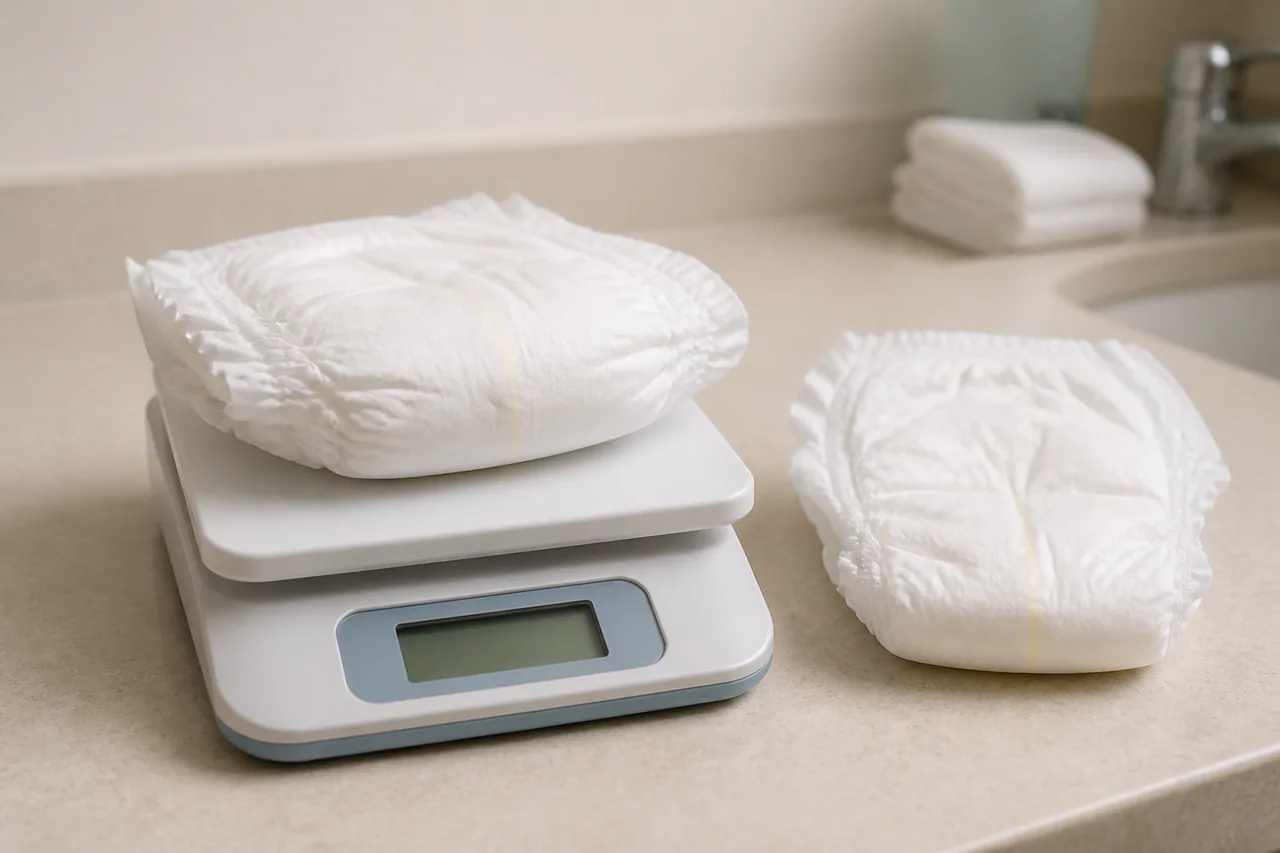
Subtract the dry diaper’s weight from the wet diaper’s weight. A difference of 1 gram is commonly estimated as approximately 1 mL of urine. Then apply the standard weight-and-time formula. Stool, creams, evaporation, or a different diaper can reduce accuracy, so follow the relevant clinical procedure.
Is 1 cc of urine the same as 1 mL?
Yes. One cubic centimeter, written as 1 cc, has the same volume as 1 mL. A documented output of 75 cc can therefore be entered as 75 mL. Using mL is generally clearer in clinical records.
Does low urine output always mean kidney failure?
No. Reduced output can result from dehydration, reduced kidney blood flow, urinary obstruction, retention, medications, catheter problems, or inaccurate collection, as well as kidney injury. Some people with acute kidney injury continue to produce urine. Clinical evaluation is needed to identify the cause.
Is urine output the same as fluid balance?
No. Urine output covers urine alone, while fluid balance compares recorded intake with all measured outputs. Fluid balance may also be affected by vomiting, stool, drains, blood loss, sweat, and insensible losses through the skin and breathing.
Using the Result Responsibly
The arithmetic behind how to calculate urine output ml kg hr is straightforward: divide collected urine in milliliters by weight in kilograms multiplied by elapsed time in hours. Accuracy depends on using matching units and a complete collection.
The result becomes clinically meaningful only when considered as a trend and interpreted alongside age, symptoms, fluid intake, medications, examination findings, serum creatinine, and other relevant information. Use a calculator to check the mathematics, but rely on appropriate clinical assessment when output is low, absent, or otherwise concerning.